
Can you tell the difference between a crocodile and an alligator? Or a seal and a sea lion? Do you even know why some of these animals look so similar? Honestly, learning the actual differences between the physical characteristics is so interesting to me. Maybe they’re in the same species family or come from the same dinosaur hundreds of thousands of years ago. I always hear people call animals the wrong name, so here is how to actually tell who is who.
- Seals vs. Sea Lion
Seals have two different “types” of seals, “true seals” and “eared seals,” which all depend on whether they have external ears and the length of their flippers. True seals don’t have external ears; eared seals have small ears similar to sea lions. Sea lions and fur seals have been known to be very talkative, compared to true seals, which are very quiet animals. Seals stay in colder waters and primarily eat fish, but other types of seals eat squid, mollusks, or crustaceans. Leopard seals even hunt penguins.
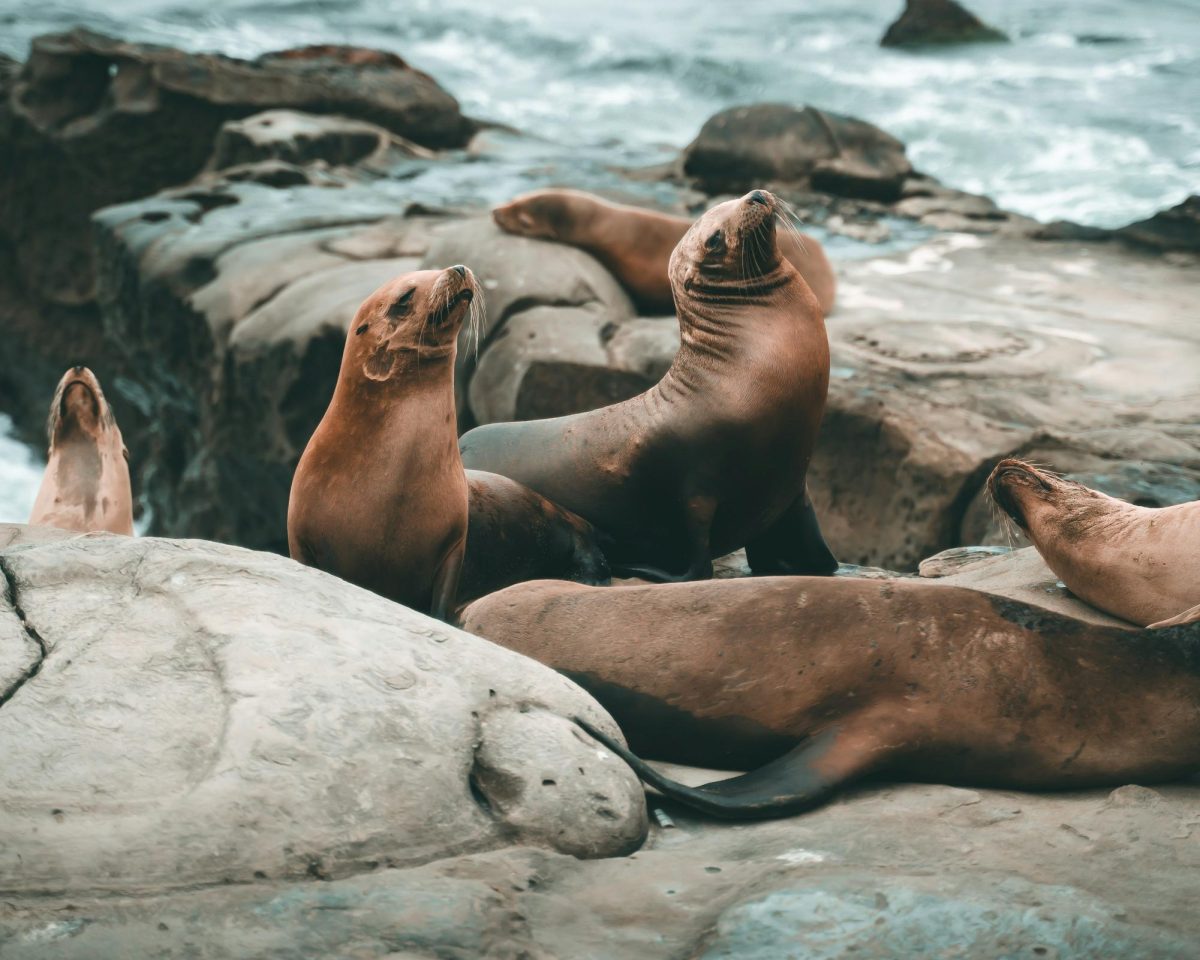
Sea lions are classified as an “eared seal,” but seals aren’t the same as a sea lion (think about squares and rectangles). California sea lions still primarily eat fish like squid, anchovies, mackerel, rockfish, and sardines, which are all found offshore in coastal waters. They can also be found stealing fish from commercial fishing gear, fishing lines, and passage facilities at dams and rivers. Sea lions stay in the shallow waters of the eastern North Pacific Ocean, preferring warm sandy beaches or rocky coves.
To perfectly tell the difference between the two, ask yourself, are there ear flaps? Does it have fur? Can it walk on land? Is it loud or quiet? Does it bark or grunt? If it has ear flaps, with no fur, can walk on land, and has loud barks, then you have a California Sea Lion. If it has ear holes (no flaps), has fur, bounces on land, and has a soft grunt, then you have a True Seal.
- Jaguar vs. Leopard
The third biggest feline in the Americas, they are similar to leopards, but their spots have more complex patterns than a leopard’s. Jaguars are amazing swimmers, using their incredibly powerful jaws to catch different types of fish and turtles. On land, they hunt for deer, peccaries, capybaras, and tapirs. They like to be alone and are very territorial of their homes; they mark their areas with claw marks in the nearest trees. Female jaguars have small litters of one to four cubs at a time. Cubs are born blind and helpless, needing their mother to stay with them.
Unlike jaguars, leopards are the smallest large cat; their spots have dotless rosettes on their back. Females have a small litter of two to three cubs who are born almost bald and blind. The mother might leave her cubs alone for days at a time so she can hunt. Leopards like to be alone most of the time; they mark their ranges in the same way as a jaguar.
The biggest visual difference between the two is their patterns all over their body. If the rosettes have dots in the middle, it is a jaguar. If there aren’t any dots, it is a leopard. Other key differences would be things like their size: leopards are smaller, usually weighing around 38 pounds to 200 pounds. Jaguars usually weigh between 80 and 350 pounds. So, ask yourself, are there dots in the rosette’s center, and is it big or small?
All animals deserve to be called by their actual name, like how you wouldn’t call someone named Ryan, Dylan, for whatever reason. It could be hard to tell the difference between two animals from a far distance, but it only takes a few minutes to find the difference.
Sources:
https://www.britannica.com/animal/seal-mammal
https://www.fisheries.noaa.gov/species/california-sea-lion
https://www.marinemammalcenter.org/news/seal-vs-sea-lion-your-guide-to-knowing-the-difference
https://www.nationalgeographic.com/animals/mammals/facts/jaguar
https://animals.sandiegozoo.org/animals/leopard
https://panthera.org/blog-post/wild-cats-101-jaguars-vs-leopards