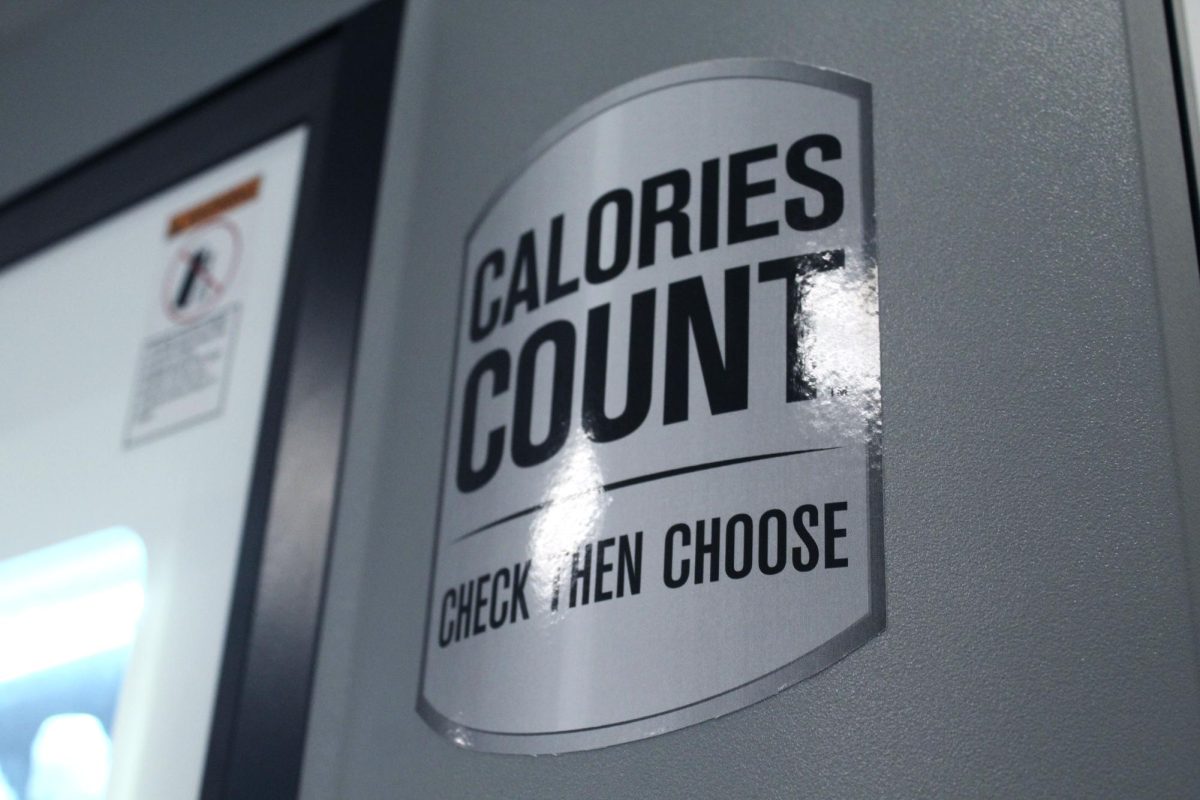
“Calories count, check then choose.” This is an innocent message instructing people to be mindful of their choices, but it is not one that should be displayed in a building full of highly impressionable teenagers. The vending machines in our lunch room have had this message on them since day one. It may seem harmless, but teenagers are prone to internalizing just about everything.
Teenagers are still at a crucial point in their neural development, and decision-making is one of the last areas to mature. According to the National Institute of Mental Health (NIMH), changes to the prefrontal cortex (decision-making hub) can cause teens to “take more risks because the social benefits outweigh the possible consequences of a decision.” High schoolers can easily imagine benefits for themselves, but are typically inaccurate when visualizing possible repercussions.
When the brain is still developing, the stress response is much more intense than that of a fully developed one. This greatly increases teens’ risk for developing stress-related mental illnesses. Anxiety and depression are much more common in teenagers due to stress and lack of sleep, which can further impact attention and impulse control.
Some of the least-discussed mental illnesses are eating disorders. When teenagers feel pressure to fit in amongst their peers, it can be difficult to be content with one’s image. In the United States alone, approximately 13% of people aged 13-18 struggle with eating disorders. These statistics make EDs the third most common chronic illness in adolescents. From 2018 to 2022, reported ED cases in children and teens increased by 40%. The most shocking numbers were seen in cases of Avoidant/Restrictive Food Intake Disorder, or ARFID. From 2018 to 2022, ARFID diagnoses rose by a whopping 305%.
With those statistics, it is exceedingly clear that there is an immense problem when it comes to body image in teenagers. To an adult, “Calories count, check then choose” is just a sign on a vending machine reminding them to be aware of what they use to fuel their bodies. To a growing teen, however, it is likely to be interpreted as an attack on the insecurities they already have.
Sources:
https://www.nimh.nih.gov/health/publications/the-teen-brain-7-things-to-know